Why painting estimates go cold
Painting customers often need time to compare colors, review scope, talk with a spouse, or decide whether to do interior and exterior work together.
That delay is normal, but it creates risk. If the estimate stays buried in a text thread or email inbox, the customer may assume you are too busy or may book the painter who checks in first.
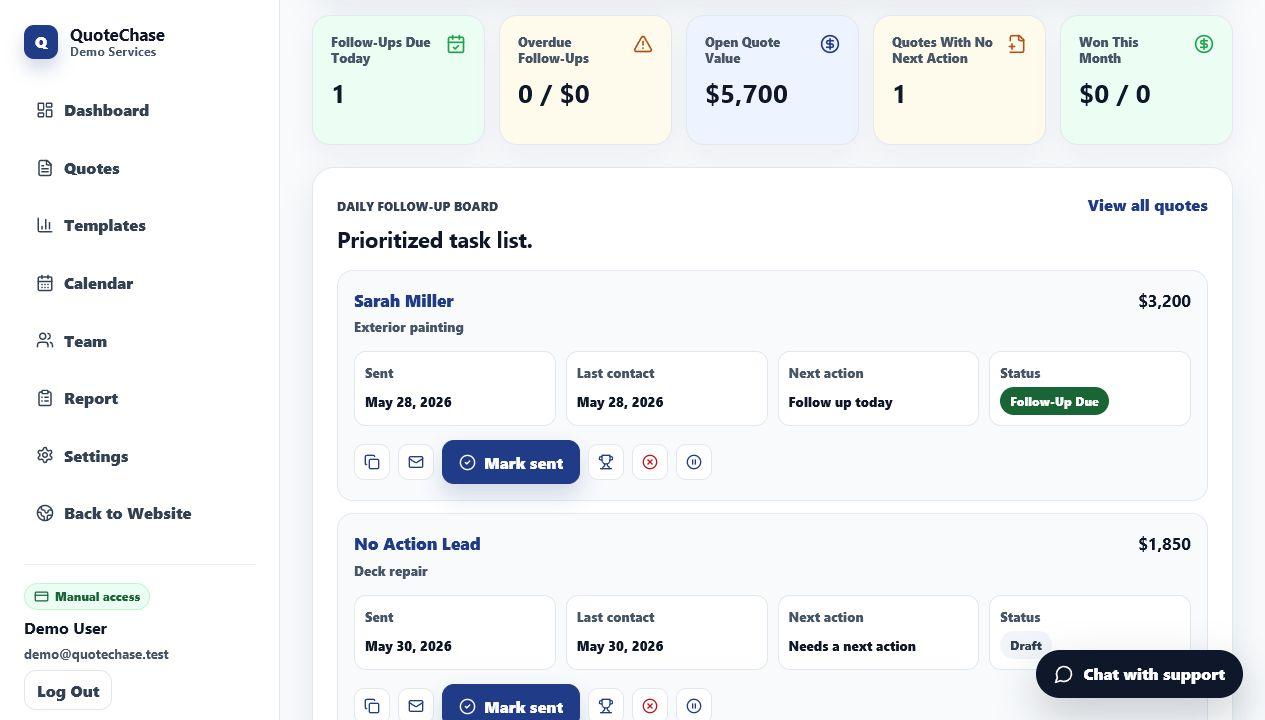
QuoteChase gives every painting estimate a clear status and next follow-up date so good leads do not fade just because the crew got busy.
How QuoteChase helps painting contractors
Add the customer, project type, quoted amount, and follow-up date after you send the estimate.
Each morning, open the daily list and see which homeowners need a quick check-in. The goal is simple: know who needs attention today and what each open estimate is worth.
- Track interior painting, exterior painting, cabinet painting, and deck staining quotes
- Keep quote amount and follow-up date together
- Move jobs to won, lost, overdue, or still open
Three painting job examples to track
Painting follow-up is not one-size-fits-all. A cabinet repaint, a whole-home interior repaint, and an exterior repaint each get stuck for different reasons.
Use the service notes to record what the customer is deciding so the follow-up feels specific instead of like a generic check-in.
- Interior repaint: follow up on rooms, ceilings, trim, patching, and timing around furniture access
- Exterior repaint: follow up on weather windows, prep scope, HOA approval, and scheduling before the season fills
- Cabinet painting or deck staining: follow up on color decisions, cure time, access, and whether the customer wants add-on work
Painter follow-up cadence
A practical schedule is to follow up one or two business days after sending the estimate, again around day five if you have not heard back, and once more around two weeks to close the loop.
For exterior work in a busy season, shorten the second follow-up because calendar spots matter. For interior work, the customer may need more time to compare scope and talk through colors.
Painting estimate follow-up message examples
Keep the message short and useful. You are not trying to pressure the homeowner; you are making it easy for them to ask questions or book the job.
First follow-upHi, just checking that you received the painting estimate. Happy to answer questions about prep, paint, or timing.
Second follow-upHi, wanted to see if you are still thinking about moving forward. I can look at scheduling options if the estimate looks good.
Scope adjustmentHi, if the full painting scope is more than you want to tackle right now, I can break it into phases or separate the rooms, trim, and ceilings.
Closing the loopHi, just closing the loop on the painting estimate. If now is not the right time, no problem. I just wanted to make sure I did not leave you hanging.
Keep quote value visible
Painters can have a lot of money sitting in open estimates. A handful of exterior painting quotes can represent weeks of work.
QuoteChase shows open quote value, won quotes, overdue follow-ups, and today's follow-up list so follow-up feels tied to real revenue.
Painting calculator example
If a painter sends 18 estimates in a month at an average of $4,200, that is $75,600 in quoted work. If eight estimates never receive a follow-up, $33,600 in quoted value may be sitting without a clear next action.
Recovering even one additional exterior or interior repaint can pay for months of a lightweight follow-up system.
Use the missed quote revenue calculator to estimate this with your own monthly quote volume and average painting estimate value.
Illustrative painting workflow
Example only: a painter adds an exterior repaint quote right after sending it, sets the first follow-up for two business days later, and notes that the homeowner is comparing trim repair scope.
When the quote appears in the daily board, the follow-up is specific: ask whether they want the trim repairs included and offer scheduling windows before the exterior calendar fills.