Why handyman quotes are hard to track
One quote might be a small repair, another might include drywall, trim, fixture installs, punch-list work, or a multi-day project.
Leads often arrive while you are on a ladder, at the supply store, or finishing another job. If estimates are spread across texts, notes, photos, and memory, it is easy to forget who needed a follow-up.
How QuoteChase helps handymen
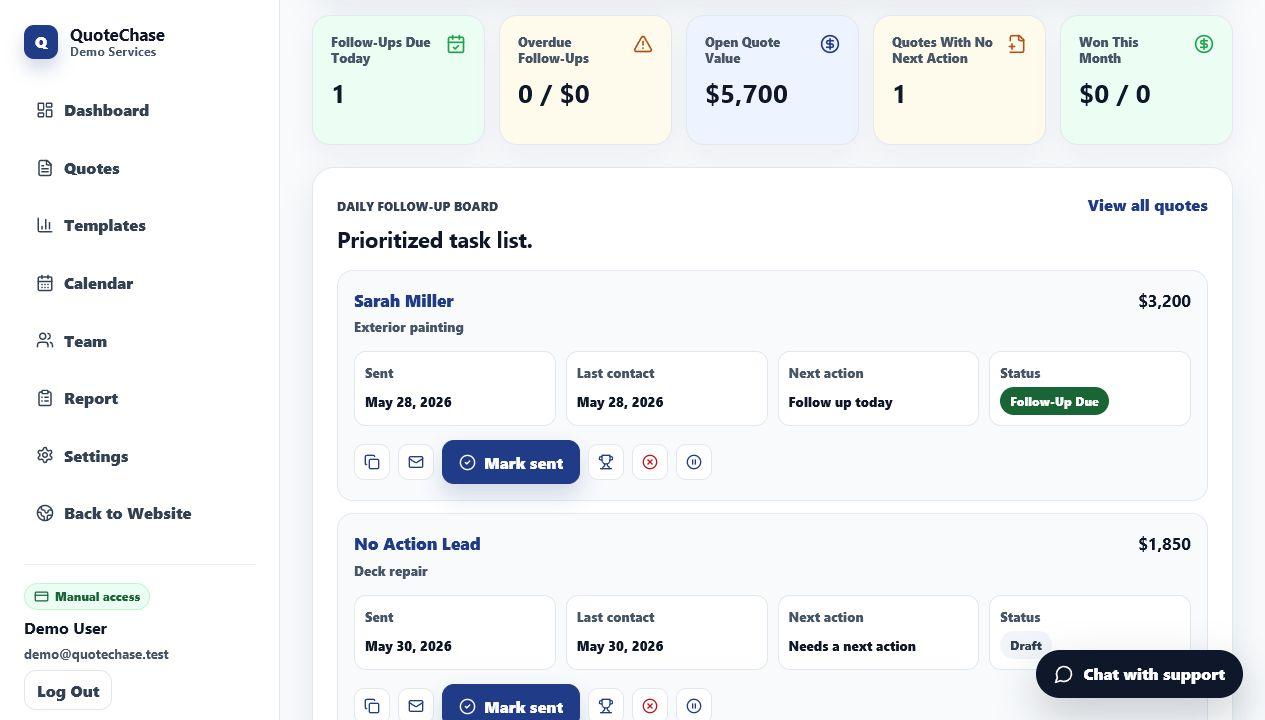
QuoteChase gives handymen a board for customer name, job type, quote amount, status, and next follow-up date.
It focuses on the part many solo operators actually need: remembering who to follow up with so small and medium jobs do not slip away.
- Track repair, installation, and punch-list estimates
- See who needs a follow-up today
- Keep open quote value visible
Three handyman job examples to track
Handyman work ranges from quick repairs to multi-day punch lists, so the follow-up should match the value and complexity of the job.
Some jobs are small but quick to book; others are worth more and need several follow-ups around scope, access, materials, or timing.
- Small repair: follow up once quickly and make it easy to approve the visit
- Rental turnover or punch list: follow up on access, item priority, and whether the work should be split into phases
- Deck repair, door replacement, or fixture install: follow up on materials, scheduling, and whether the customer wants related work bundled
What handymen should do after a customer says maybe
A lot of handyman work sits in the maybe stage. The customer may want the repair done, but they need to talk with a spouse, confirm access to the property, compare materials, or decide whether to combine several small tasks into one visit.
That is exactly where a quote tracker helps. Instead of leaving the quote open with no plan, set the next follow-up date and add a short note about what the customer is deciding. When the quote comes back up, you know whether to ask about timing, scope, materials, or scheduling.
Simple follow-up schedule for handymen
For many handyman quotes, follow up one or two business days after sending the estimate. If the customer is still deciding, check back after a week.
For urgent repairs, follow up sooner because the customer likely wants the work done quickly.
Handyman follow-up message examples
Use normal language and make the next step easy.
Small repairHi, just checking that you received the estimate for the repair work. Let me know if you have questions or want to get on the schedule.
Larger projectHi, wanted to follow up on the estimate for the punch-list work. I can adjust the scope if you want to split it into phases.
Access questionHi, checking back on the handyman estimate. If access or timing is the main issue, send me a couple windows that work and I can see what fits.
Close the loopHi, just closing the loop on the repair estimate. If you decided to hold off, no problem. I just wanted to make sure I did not miss anything.
Keep the follow-up process lightweight
Many handymen do not need routing, dispatch, complex forms, or a sales pipeline.
They need a clean list of open estimates and a way to remember who needs attention. The best system is one you can update between jobs, from the truck, or at the end of the day without feeling like office work has taken over the business.
QuoteChase keeps the follow-up workflow narrow: add the quote, set the next date, check the daily list, and update the outcome. That is enough structure to stop missed follow-ups without forcing a solo operator into a full operations platform.
Handyman calculator example
If a handyman sends 24 estimates in a month at an average of $725, that is $17,400 in quoted work. If 10 quotes never get a follow-up, $7,250 in work may be sitting without a next action.
Recovering one extra punch-list project or rental turnover can matter more than chasing a brand-new lead.
Use the missed quote revenue calculator to estimate the follow-up value in your own handyman business.
Illustrative handyman workflow
Example only: a handyman adds a rental turnover estimate, notes that the owner may split the list into phases, and schedules a follow-up for three days later.
When the quote appears in the daily board, the follow-up can ask whether to handle safety items first, bundle the smaller repairs, or schedule the full list.